Access(ing) Intimacy
An Archive of Chronic Illness
November 10, 2025 - December 4, 2025
124 Borland Building, University Park, PA 16802
Public Zoom Tour Friday November 21, 2025 from 12:00 pm to 1:00 pm EST.
Closing Reception Thursday, December 4, 2025 from 4:00 to 6:00 pm EST.
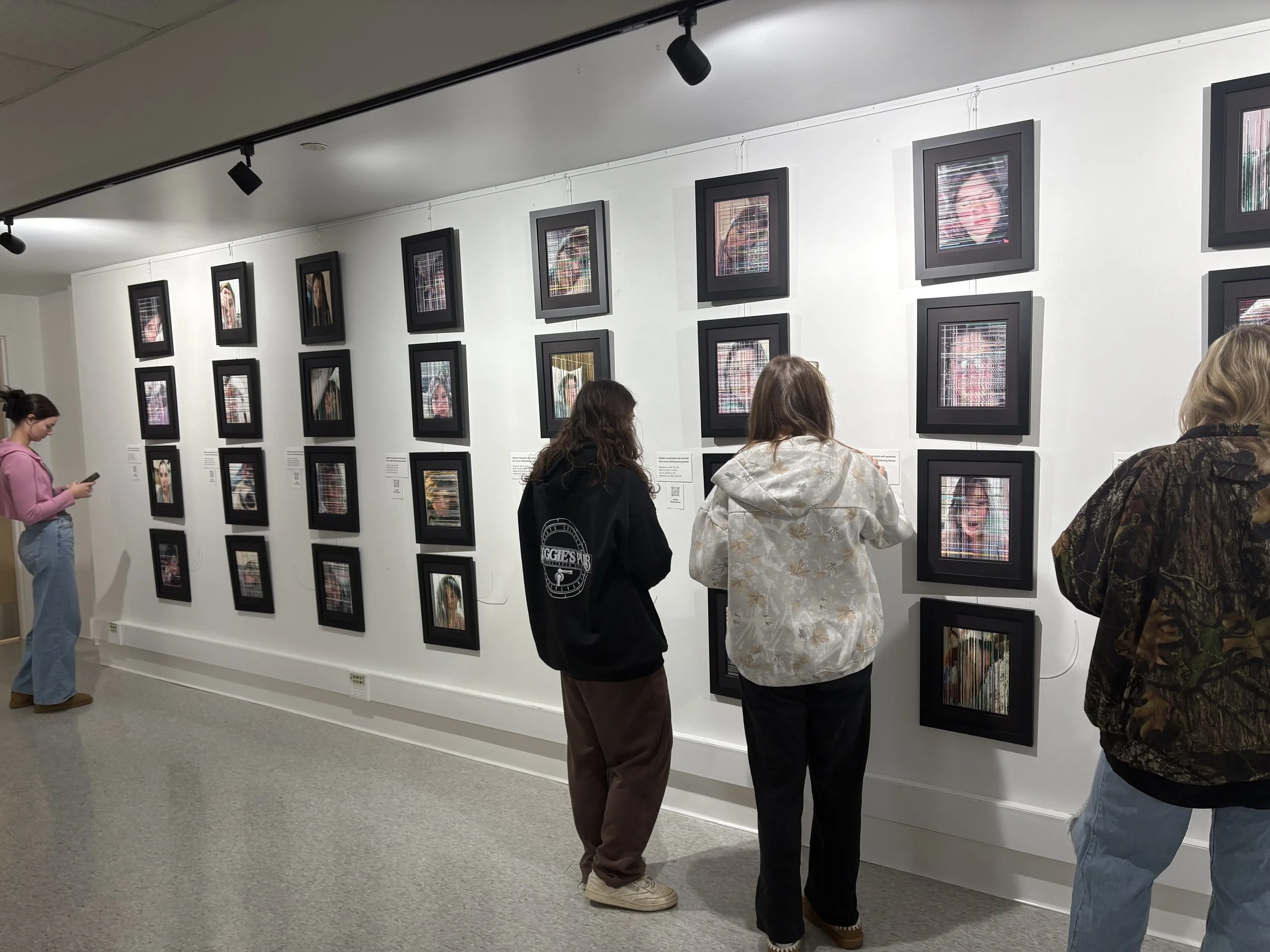
Visitors to the exhibition listen to audio descriptions of the artworks on their phones and walk through the gallery space during a class visit.
Photo courtesy of Eric Anthony Berdis
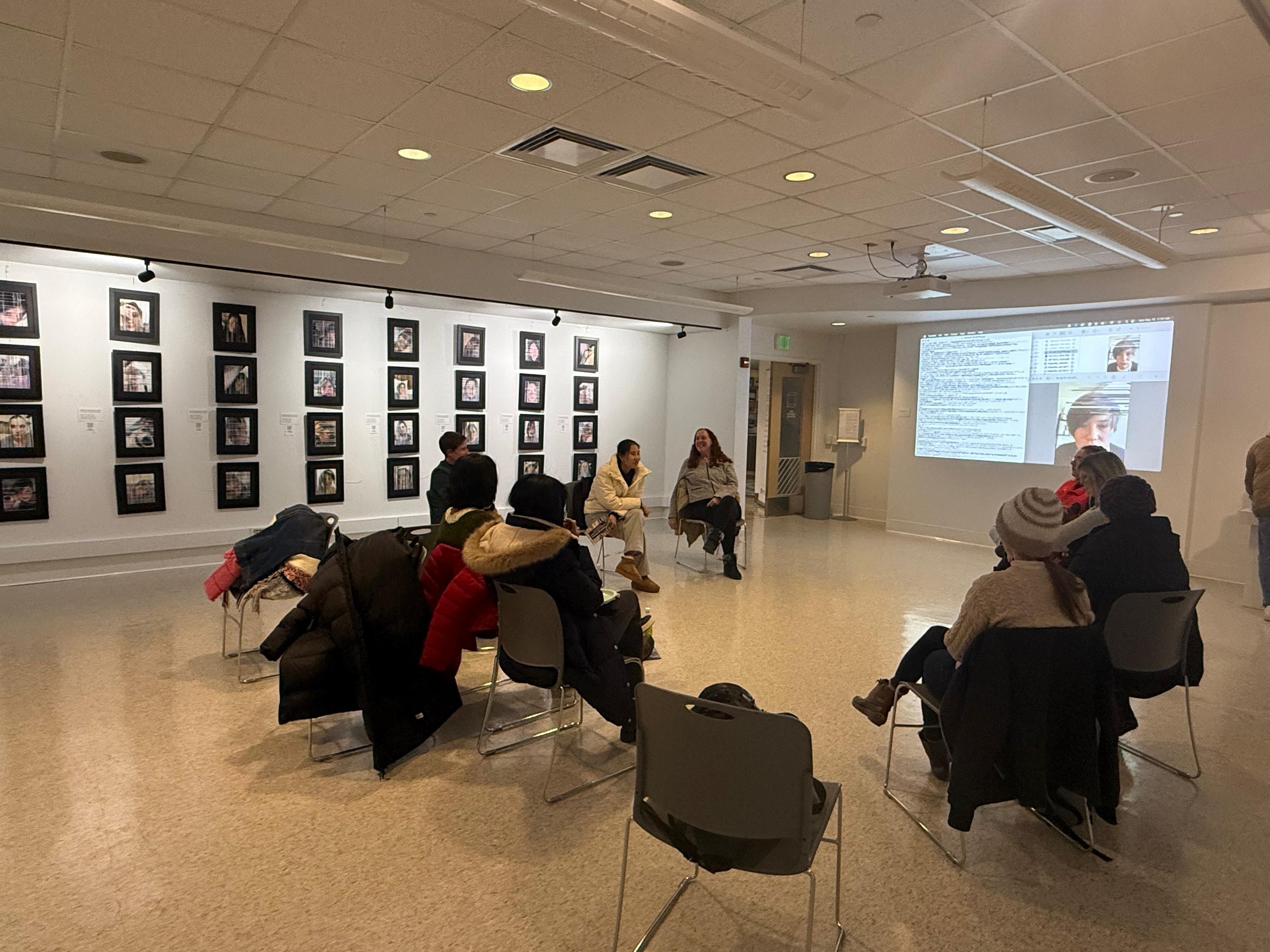
Visitors to the exhibition’s closing reception engaging in a dialogue about the exhibition themes .
Photo courtesy of Pin-Hsuan Tseng 曾品璇
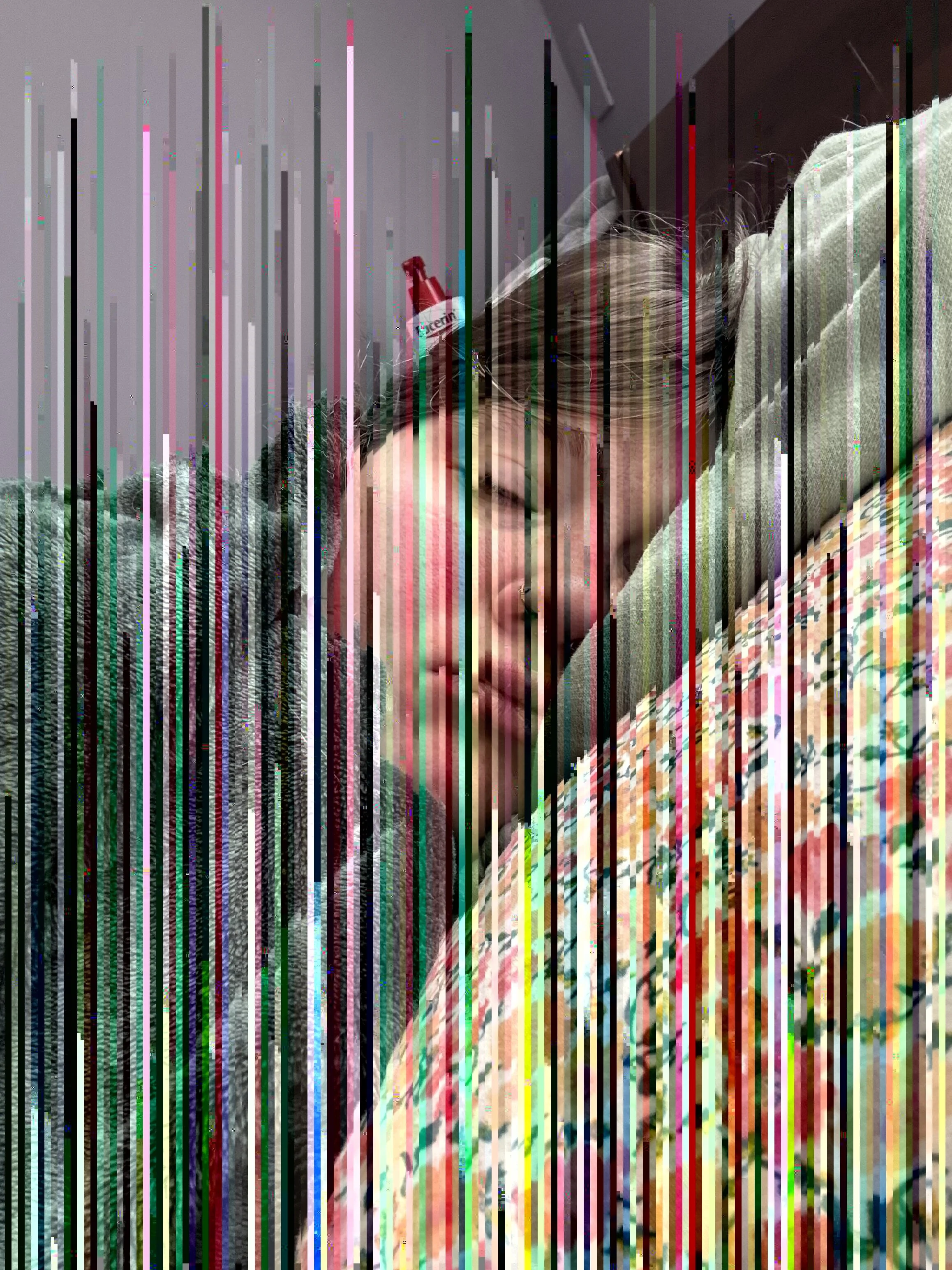
“Access(ing) Intimacy: An Archive of Chronic Illness” examines the unwell body and the ways we care for ourselves when our unruly bodies do not fit within medical or social structures. It presents disability and access themes such as disclosure, the pressure to "perform" dis/ability, productivity, accommodations, and an embodied narrative about chronic illness through arts-based research. Lewis makes their experiences of illness visible after a history of not being believed, taken seriously, and blamed for their un/wellness, drawing on an archive of self-portraits documenting their chronic illness, which Lewis began recording in 2014 and continues in the present. This exhibition responds to the pressures on disabled bodies to conform to normative, capital-driven structures and how disabled people navigate suspicion around their conditions, causing them to perform for others as a form of self-care.
This exhibition draws it’s name from disability activist Mia Mingus, who explains “that elusive, hard to describe feeling when someone else ‘gets’ your access needs.” Access intimacy is “the kind of eerie comfort that your disabled self feels with someone on a purely access level … It could also be the way your body relaxes and opens up with someone when all your access needs are being met … Access intimacy is also the intimacy I feel with many other disabled and sick people who have an automatic understanding of access needs out of our shared similar lived experience of the many different ways ableism manifests in our lives. Together, we share a kind of access intimacy that is ground-level, with no need for explanations. I don’t have to justify and we are able to start from a place of steel vulnerability. ” - Mingus, 2017
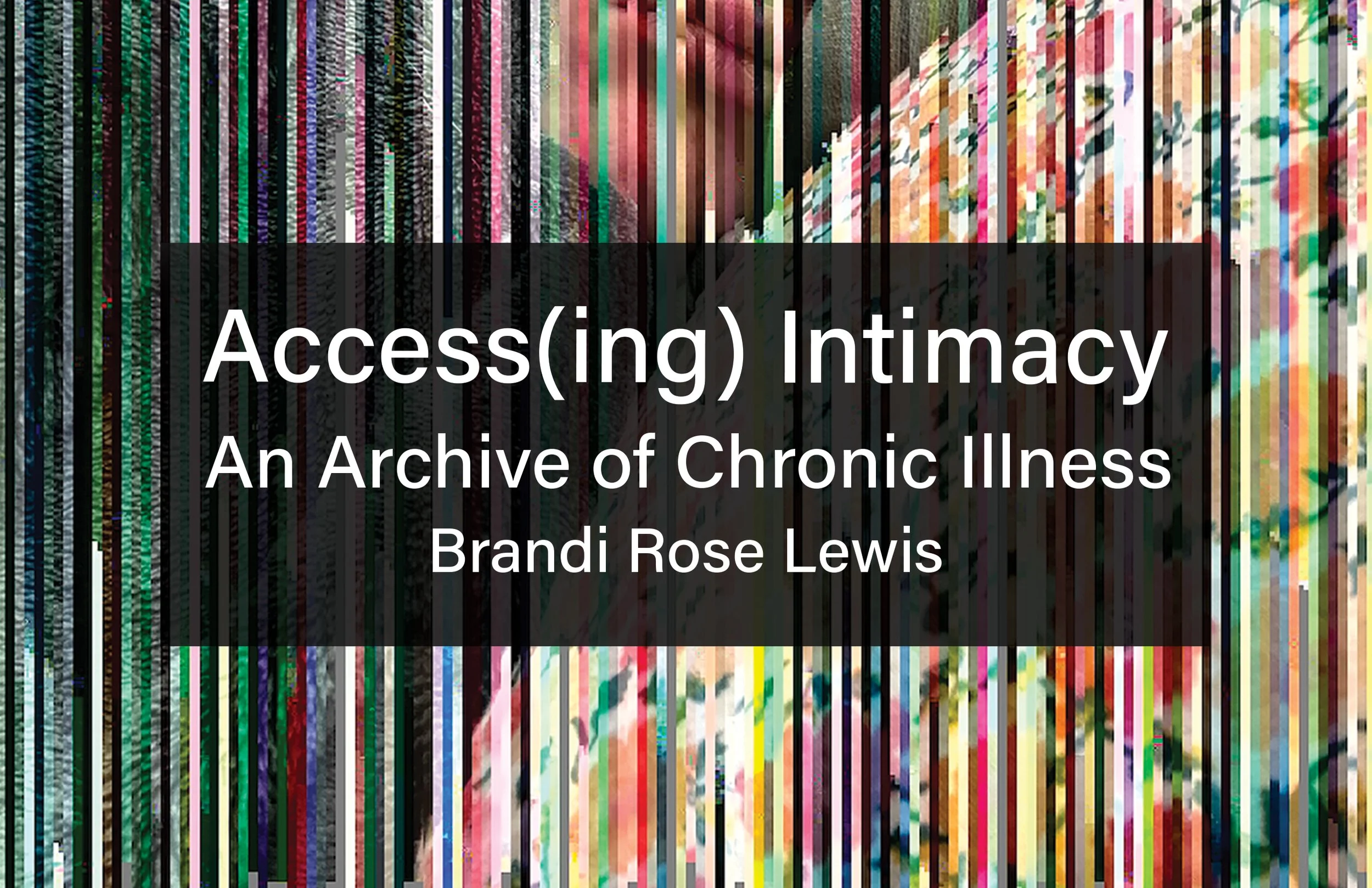
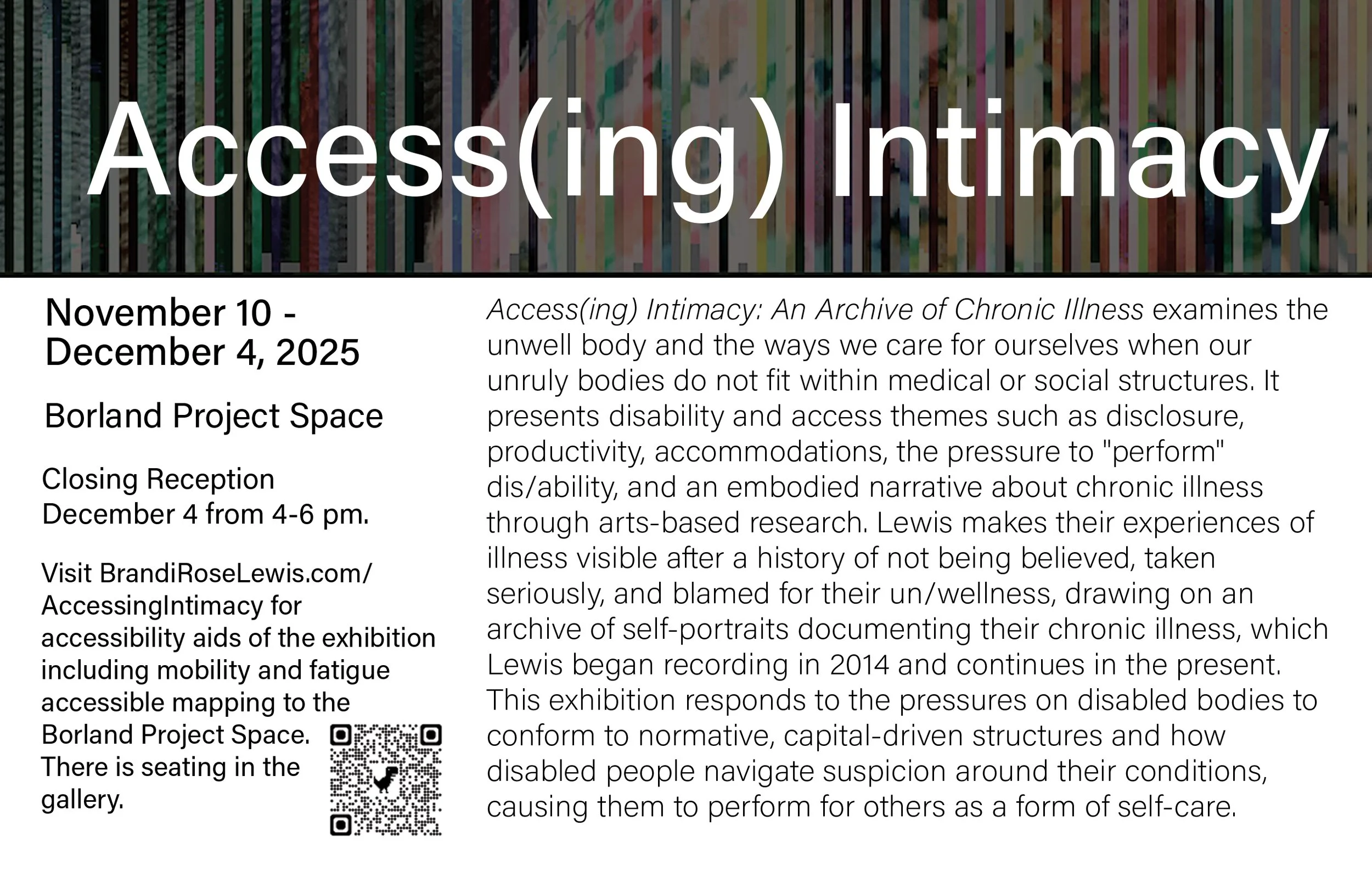
Exhibition postcard
19 second long video taken during the closing reception beginning with half of the frame showing a film time lapse film of the “databending” or coding process. On the other side of the frame is the interior of the gallery around dusk, where the artist is talking with a group and gesturing with their hands. As the video progresses, the framing shifts to center the time lapse film.
Video courtesy of Pin-Hsuan Tseng 曾品璇
Exhibition Navigation
Access Mapping
Click on the link above for detailed directions on how to access the Borland Project Space if using a mobility aid or want to avoid stairs. Seating will be available in the gallery.
Audio Descriptions
Click on the link above for audio descriptions of the exhibition statement, a description on how to navigate the gallery space, and for descriptions of selected works in the series.
Study Participation
Click on the link above to participate in the research study associated with this exhibition. This study seeks to understand your perceptions of disability and accessibility through a public disability-centered art exhibition.
Special thank you to all who supported this exhibition including the Catwalk Institute, Clovernook Center for the Blind & Visually Impaired, Penn State Department of Women’s, Gender, and Sexuality Studies, Penn State Capacities of Care research project, Penn State Art Education Program, and my partner/collaborator, Thomas Ebert.