Audio Descriptions
Exhibition Description
“Access(ing) Intimacy: An Archive of Chronic Illness” examines the unwell body and the ways we care for ourselves when our unruly bodies do not fit within medical or social structures. It presents disability and access themes such as disclosure, productivity, accommodations, the pressure to "perform" dis/ability,, and an embodied narrative about chronic illness through arts-based research. Lewis makes their experiences of illness visible after a history of not being believed, taken seriously, and blamed for their un/wellness, drawing on an archive of self-portraits documenting their chronic illness, which Lewis began recording in 2014 and continues in the present. This exhibition responds to the pressures on disabled bodies to conform to normative, capital-driven structures and how disabled people navigate suspicion around their conditions, causing them to perform for others as a form of self-care.
This exhibition draws its name from disability activist Mia Mingus, who explains “that elusive, hard to describe feeling when someone else ‘gets’ your access needs.” Access intimacy is “the kind of eerie comfort that your disabled self feels with someone on a purely access level … It could also be the way your body relaxes and opens up with someone when all your access needs are being met … Access intimacy is also the intimacy I feel with many other disabled and sick people who have an automatic understanding of access needs out of our shared similar lived experience of the many different ways ableism manifests in our lives. Together, we share a kind of access intimacy that is ground-level, with no need for explanations. I don’t have to justify and we are able to start from a place of steel vulnerability. ” - Mingus, 2017
Exhibition Layout Description
Access(ing) Intimacy features twelve columns of portraits with four works in each column, representing a selection of photographs taken during a calendar year. Photos are organized chronologically from top to bottom. Portraits are glitched in varying styles, but all are glitched by manipulating pixels in photos linearly in rows and columns. Some are glitched in a series of vertical columns and others only horizontally in rows. Some are glitched in a pattern similar to weaving, using both rows and columns, and in other woven works, rows and columns vary in thickness creating a rougher and more chaotic woven structure. Interspersed with these matte photos are seemingly random placed photos with collage iridescent and sparkling elements, drawing attention to the glitched pattern and shifting the light based on the viewer’s movement. In the room, columns start from the oldest portraits from 2014 on the far left, beginning on the wall across from the gallery’s main entrance and progressing to the right ending with newest photos from 2025. To the left of the main entrance is a video projecting time lapse recordings of the portrait’s digital manipulation or glitching process.
Process Time Lapse Video
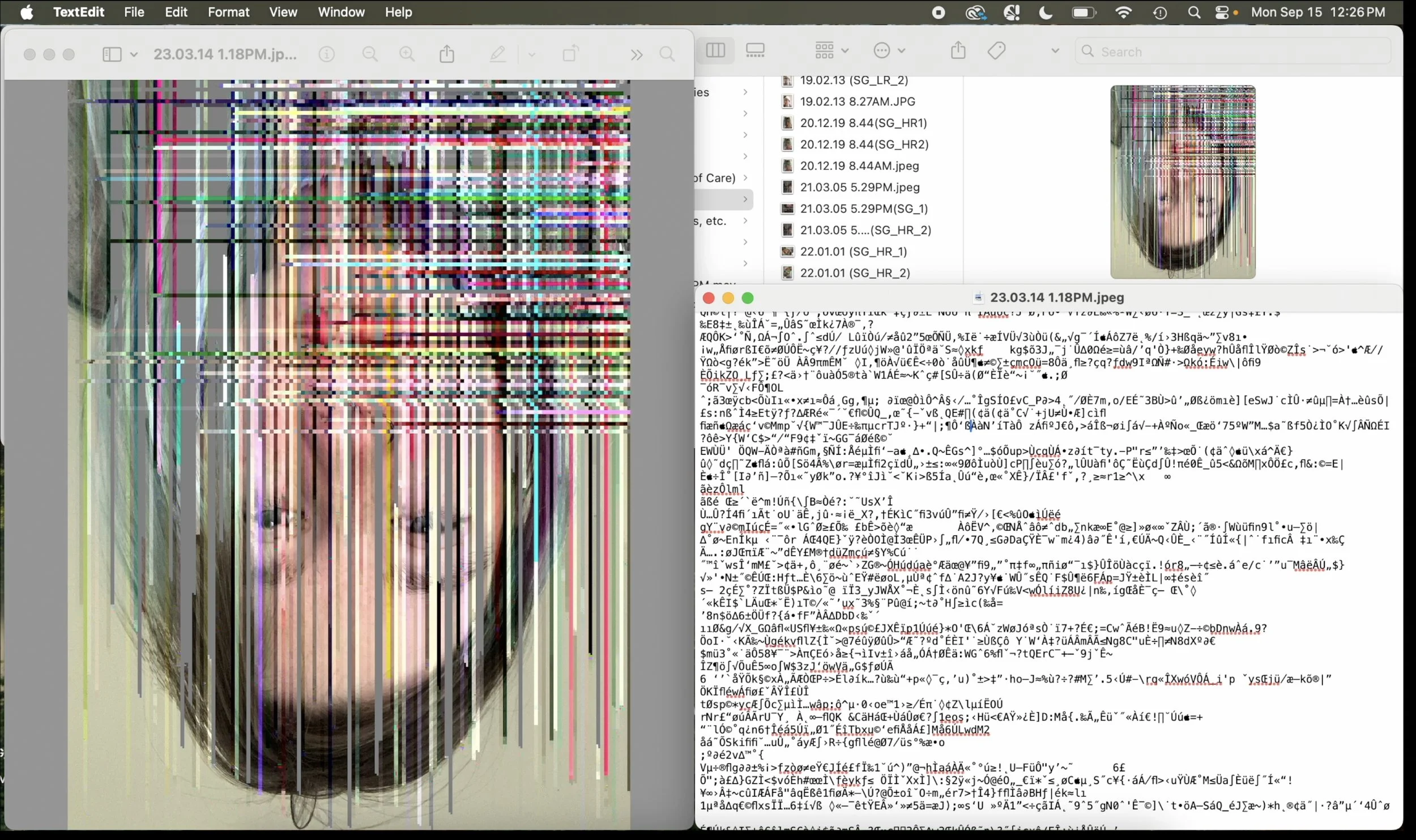
This time lapse video features the artistic process of twenty-eight of the forty-eight portraits on display. Works in the video are not in chronological order of when the photos were taken, but in order of when the artist glitched them. In each screen recording of the artist’s computer desktop, half of the screen shows a preview of the photograph, the other half is a simple text editor filled with the photo’s code, and the photo’s thumbnail placed on one side, these configurations and placements shift from video to video. As the artist scrolls down and edits the text, the glitches show up in the photo. The works capture the process of data bending, that is, using software to edit a file it was not intended to edit, here using a word processor to manipulate a photo. As the artist deletes segments of code and inserts written memories, insights, and poetry into the text, the glitched rows and columns begin to appear in the preview image and thumbnail, working their way from one side of the photo to the other, obscuring the artist’s image and other details in the photo as the video continues. As each process video ends, about a minute or two in duration, another begins, showing the process for each of the glitching techniques featured in the show.
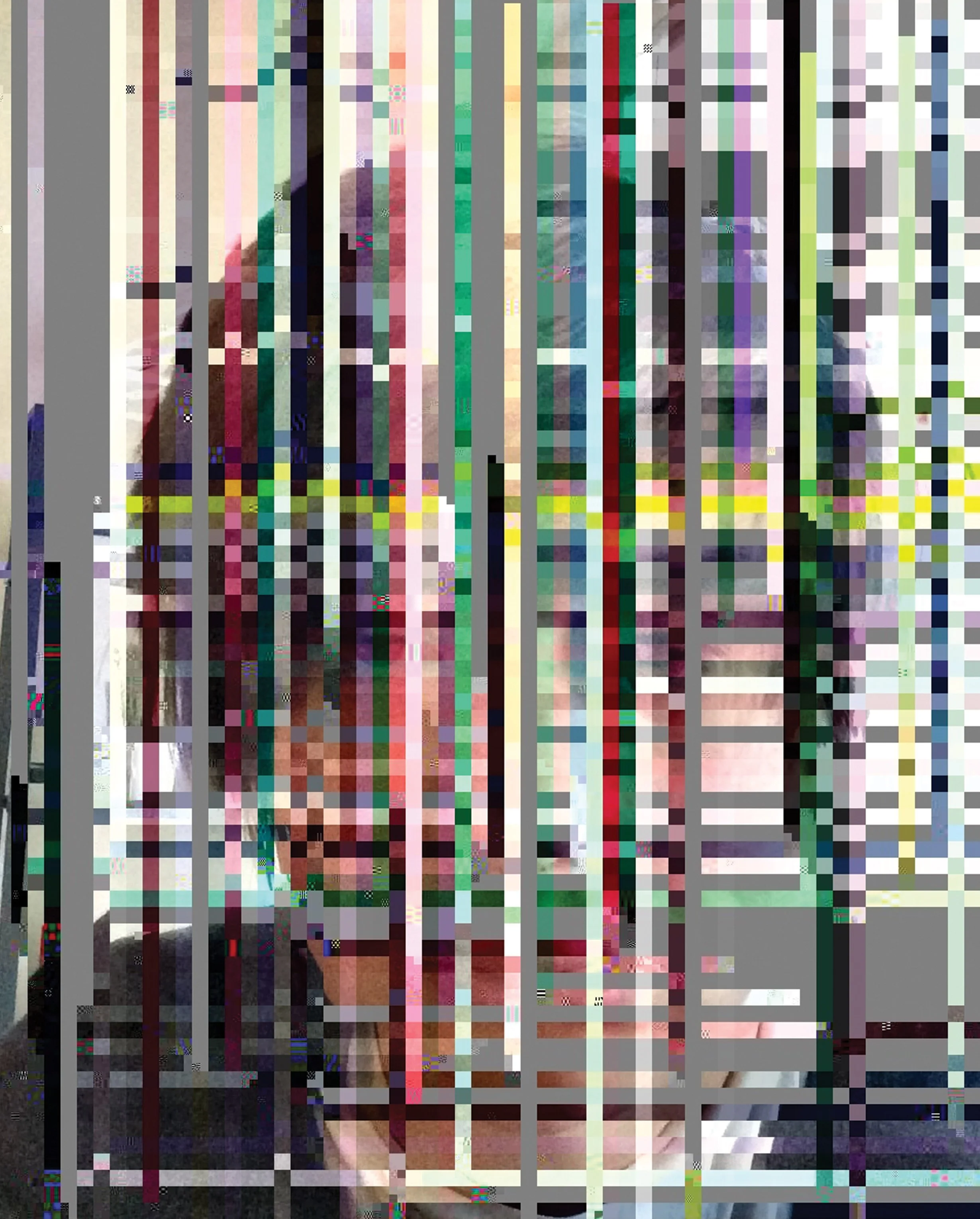
October 31, 2014 12:07 PM
This self portrait is overlaid with many horizontal and vertical lines and pixels varying in color, length, and distance from each other in a somewhat woven structure. The lines, resembling those that appear in a digital glitch, significantly obstruct the view of the underlying photo. Through the lines, the pixelated outline of a face with short dark hair is barely distinguishable. Portions of the glitched lines and pixels are collaged with light reactive materials, sparkling or changing color with movement in contrast to the matte photograph.
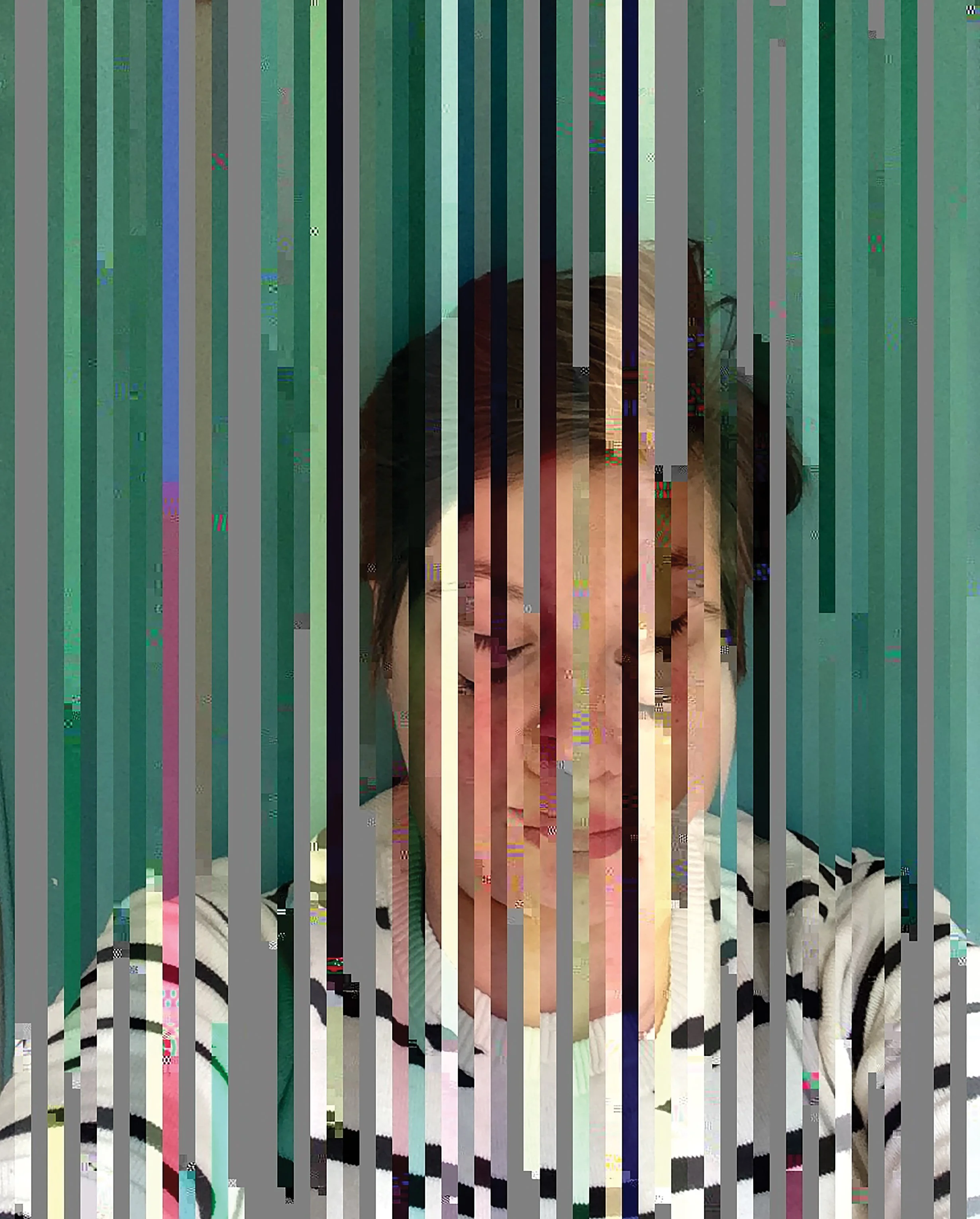
February 02, 2015 3:14 PM
This self portrait is overlaid with many vertical lines of varying lengths and colors. The lines distort the photo underneath—a white feminine appearing person with short dark hair wearing a shirt with horizontal stripes in front of a green background.
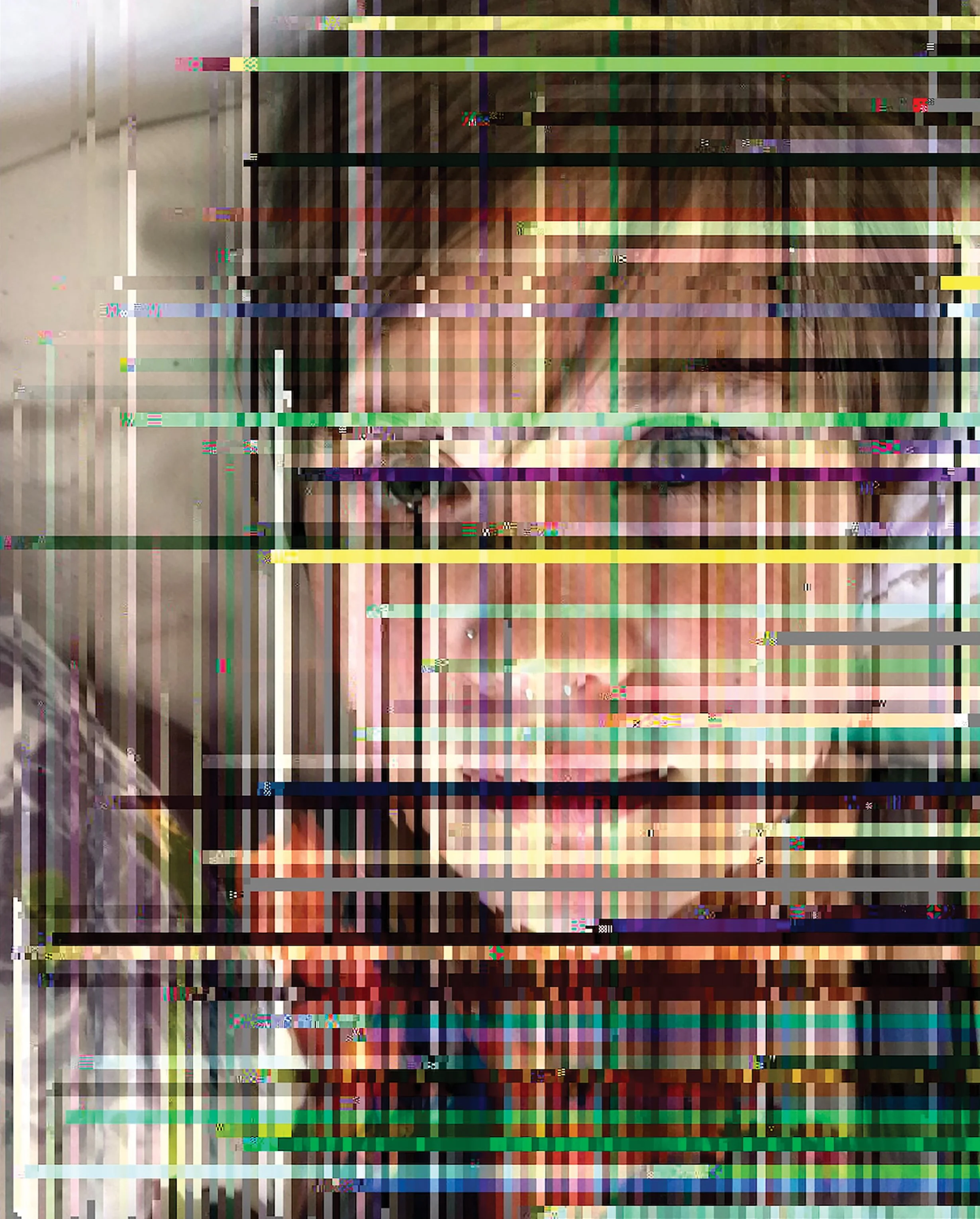
May 13, 2016 4:14 PM
This self portrait is overlaid with many horizontal and vertical lines varying in color, length, and distance from each other in a woven structure heavily clustered to the right of the image and dispersing from there. The lines, resembling those that appear in a digital glitch, obstruct much of the view of the underlying photo. Through the lines, the outline of a white feminine appearing face with short dark hair is visible. Up close, two wide-open eyes, a nose, nostril piercing, and septum piercing may be distinguishable.
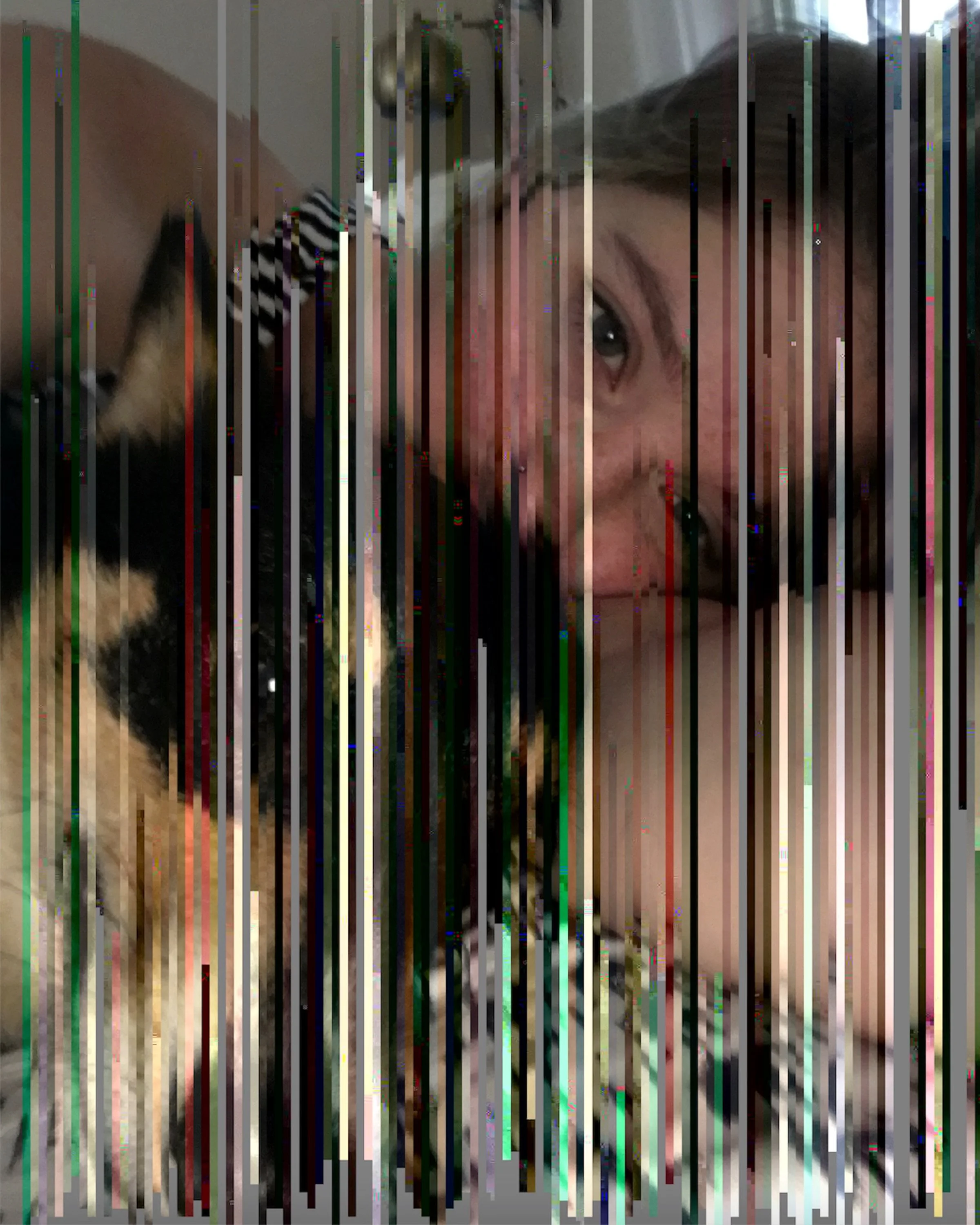
September 08, 2017 8:58 AM
This self portrait is overlaid with many vertical lines of varying lengths and color, which distorting the photo underneath and clustered at the bottom. The photo is darker but broken up by bright vibrant colors of the glitched lines. Through the lines, a white feminine appearing person lies on their side, and a dog lies with them. The photo captures their heads and the person’s shoulders with an obscured icepack in between their head and shoulder.
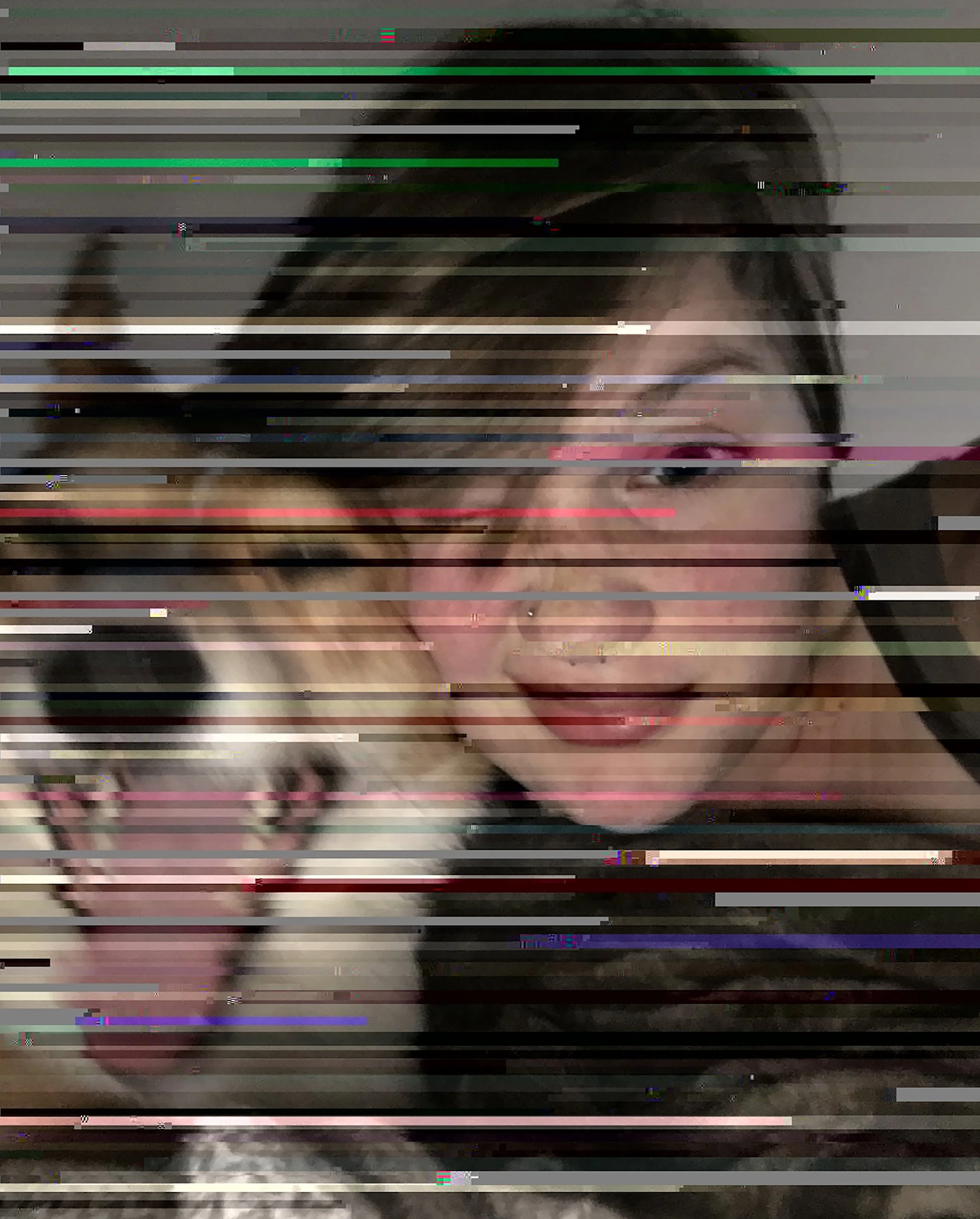
November 20, 2018 4:23 PM
This self portrait is overlaid with many horizontal lines of varying colors and lengths more clustered more to the left side of the photo. The lines distort the photo underneath, but through the gaps, a white feminine appearing person with short dark hair, a raised eyebrow, and perhaps a smirk looks directly at the camera, cheek to cheek with a yawning dog.
February 12, 2019 8:27 AM
This self portrait is overlaid with many horizontal and vertical lines and pixels varying in color, length, thickness, and distance from each other in a chaotically woven structure heavily clustered to the bottom left of the image and loosely dispersed on the top and right. The lines, resembling those that appear in a digital glitch, obstruct the view of the underlying photo. Through the lines, a white feminine appearing person's head and shoulders is visible, although due to the distortion, no facial features are distinguishable, an indiscernible white icepack covers part of their head.
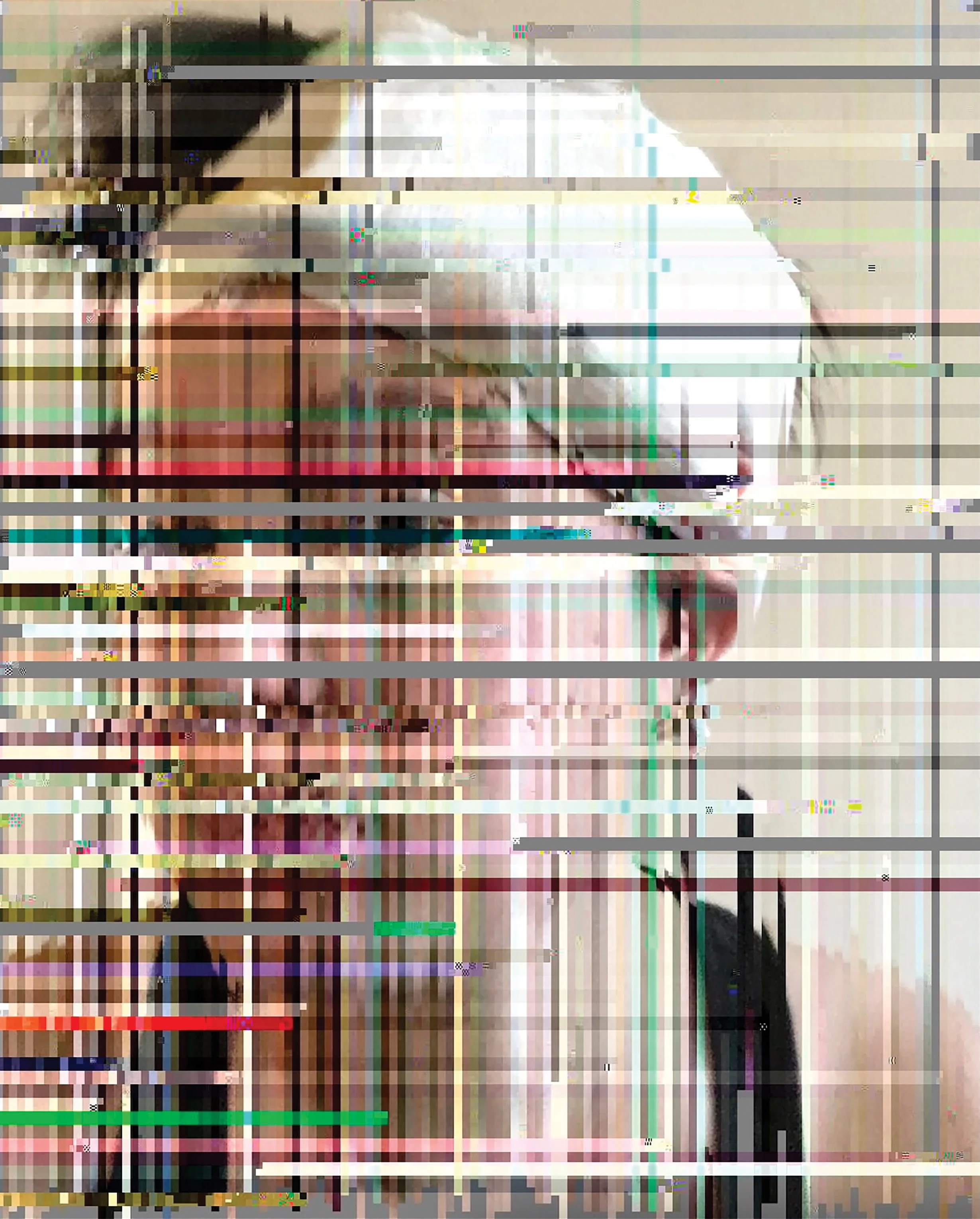
December 12, 2020 8:47 AM
This self portrait is overlaid with horizontal and vertical lines and pixels in varying colors, lengths, and thickness in a chaotic, tightly woven structure clustered to the right of the photo, but still covering up most of the space of the photo. The lines and pixels, resembling those that appear in a digital glitch, significantly obstruct the view of the underlying photo—all that is discernible is what seems to be the shape of a person’s head tilted to the side. Portions of the glitched lines and pixels are collaged with light reactive materials, sparkling or changing color with movement in contrast to the matte photograph.
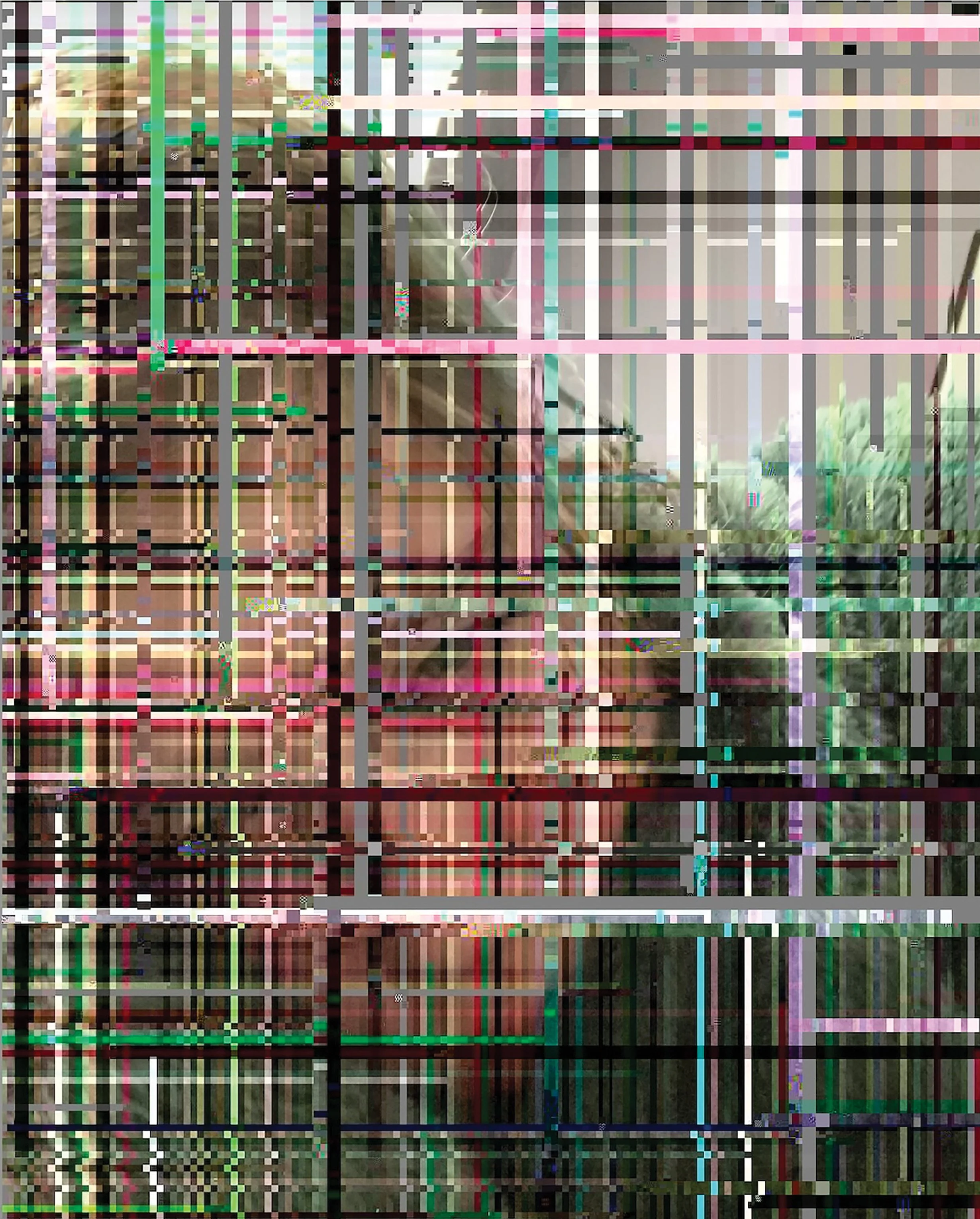
July 01, 2021 7:30 AM
This self portrait is overlaid with many horizontal lines of varying colors and lengths starting from the left side of the photo, which distort much of the photo underneath. Through the gaps in the lines, we see the shape of a white person’s face, with distinguishable short, dark hair, and a nose. All other features are obscured by the lines. Portions of the glitched lines are collaged with light reactive materials, sparkling or changing color with movement in contrast to the matte photograph.
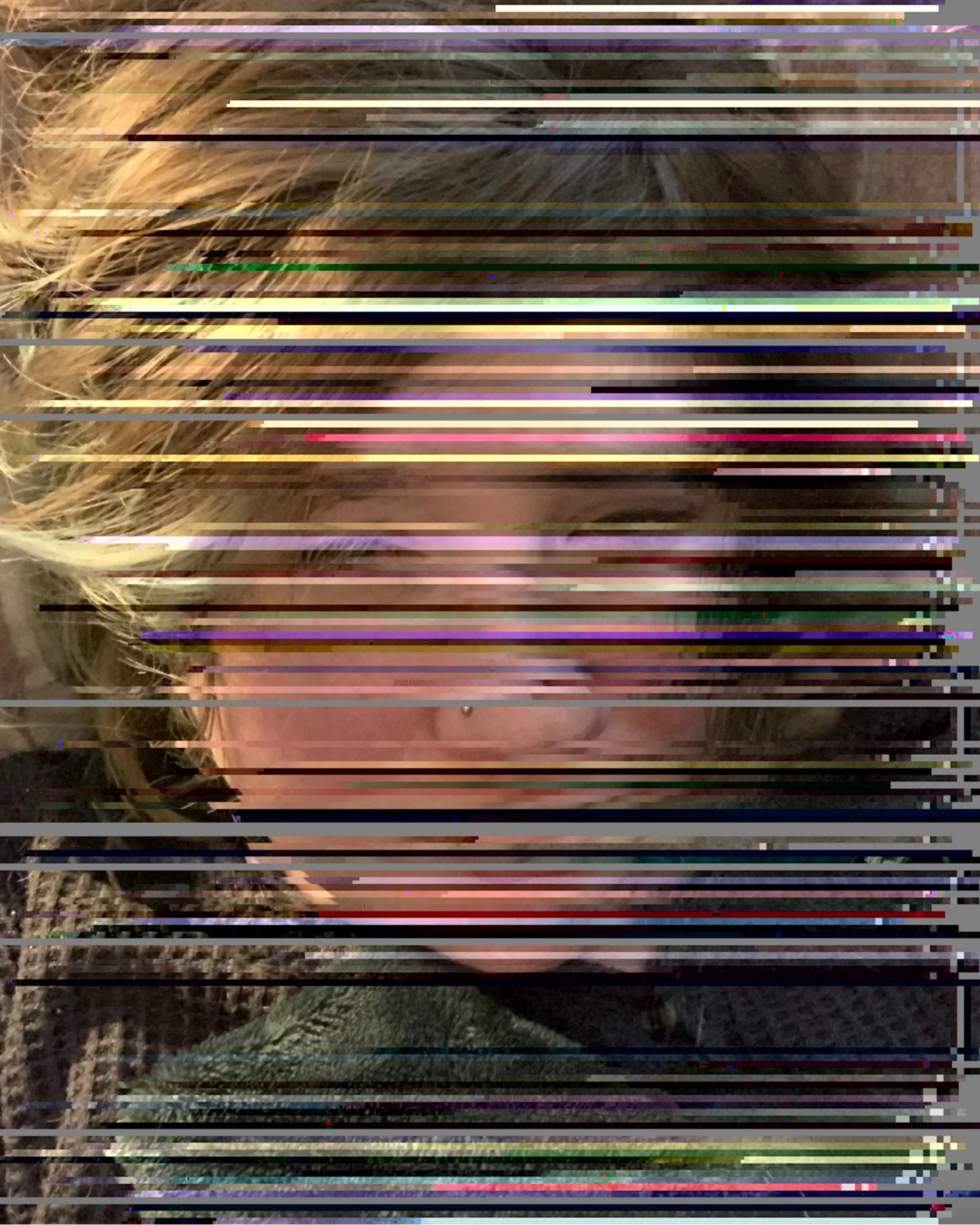
October 09, 2022 10:19 AM
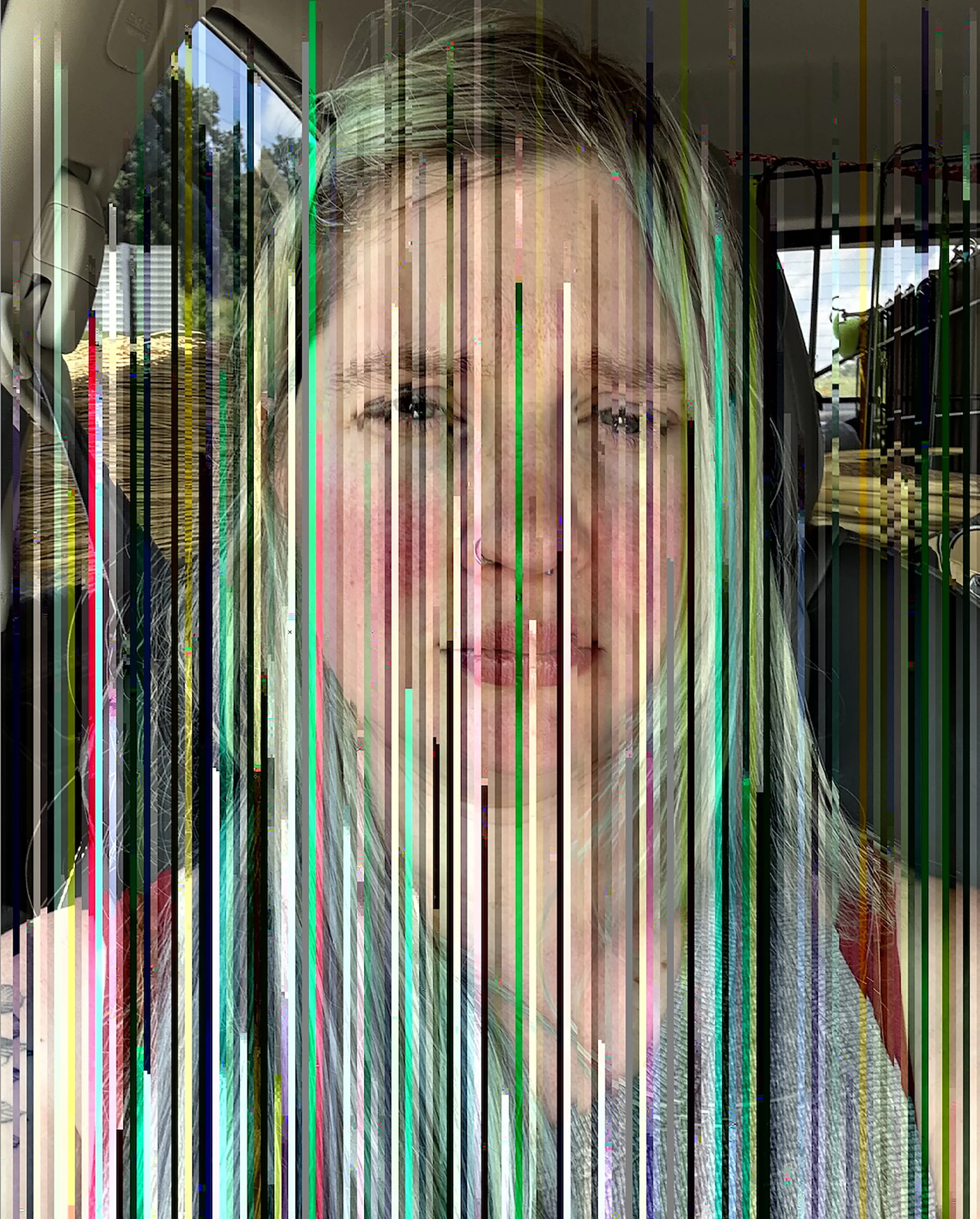
This self portrait is overlaid with many horizontal and vertical lines varying in color, length and distance from each other in a tightly woven structure across most of the image. The lines, resembling those that appear in a digital glitch, obstruct the view of the underlying photo, although most details remain discernable. The photo captures a white feminine appearing person with long blue hair in a short sleeve black shirt. They look directly at the camera with a neutral expression.
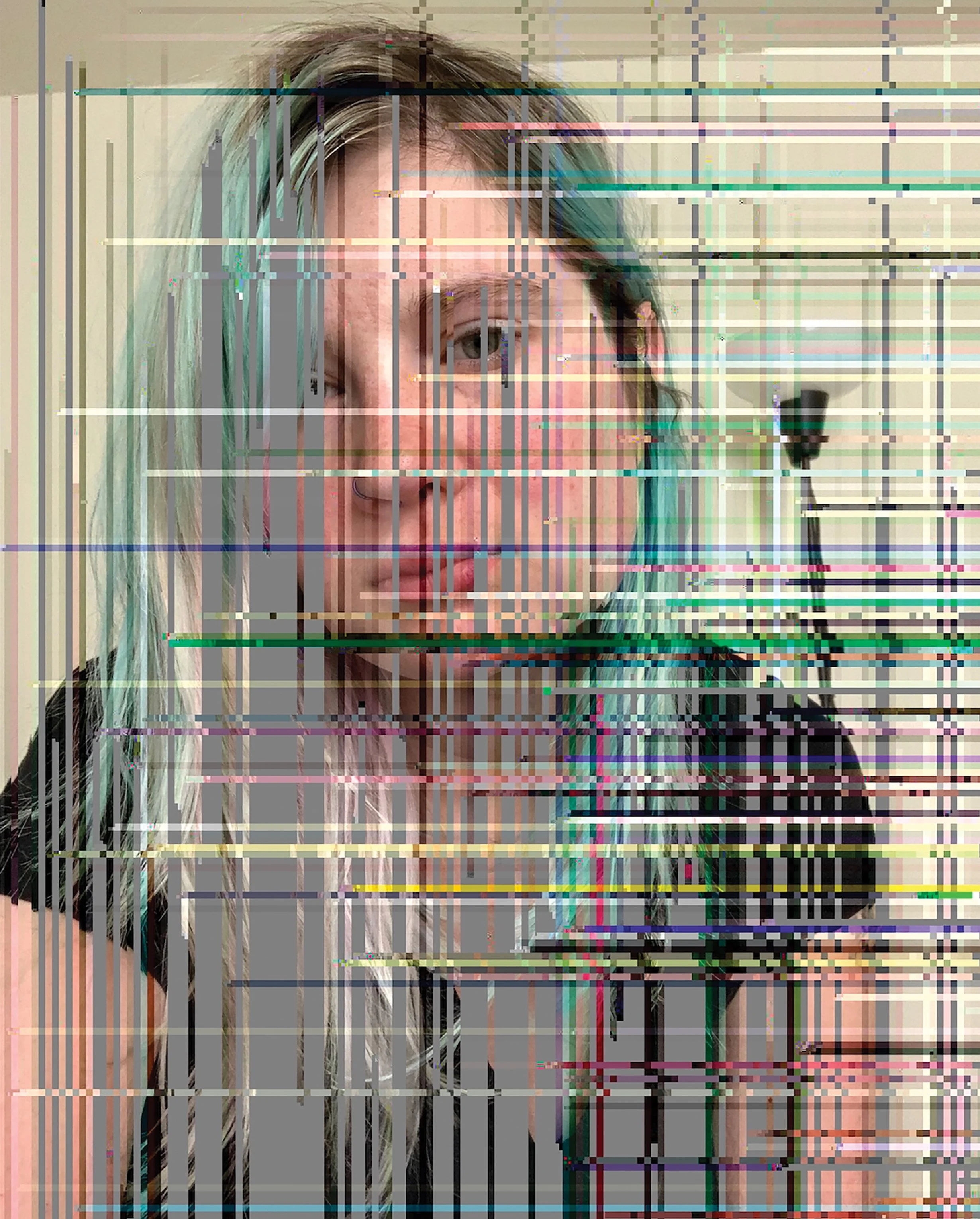
February 10, 2023 7:01 AM
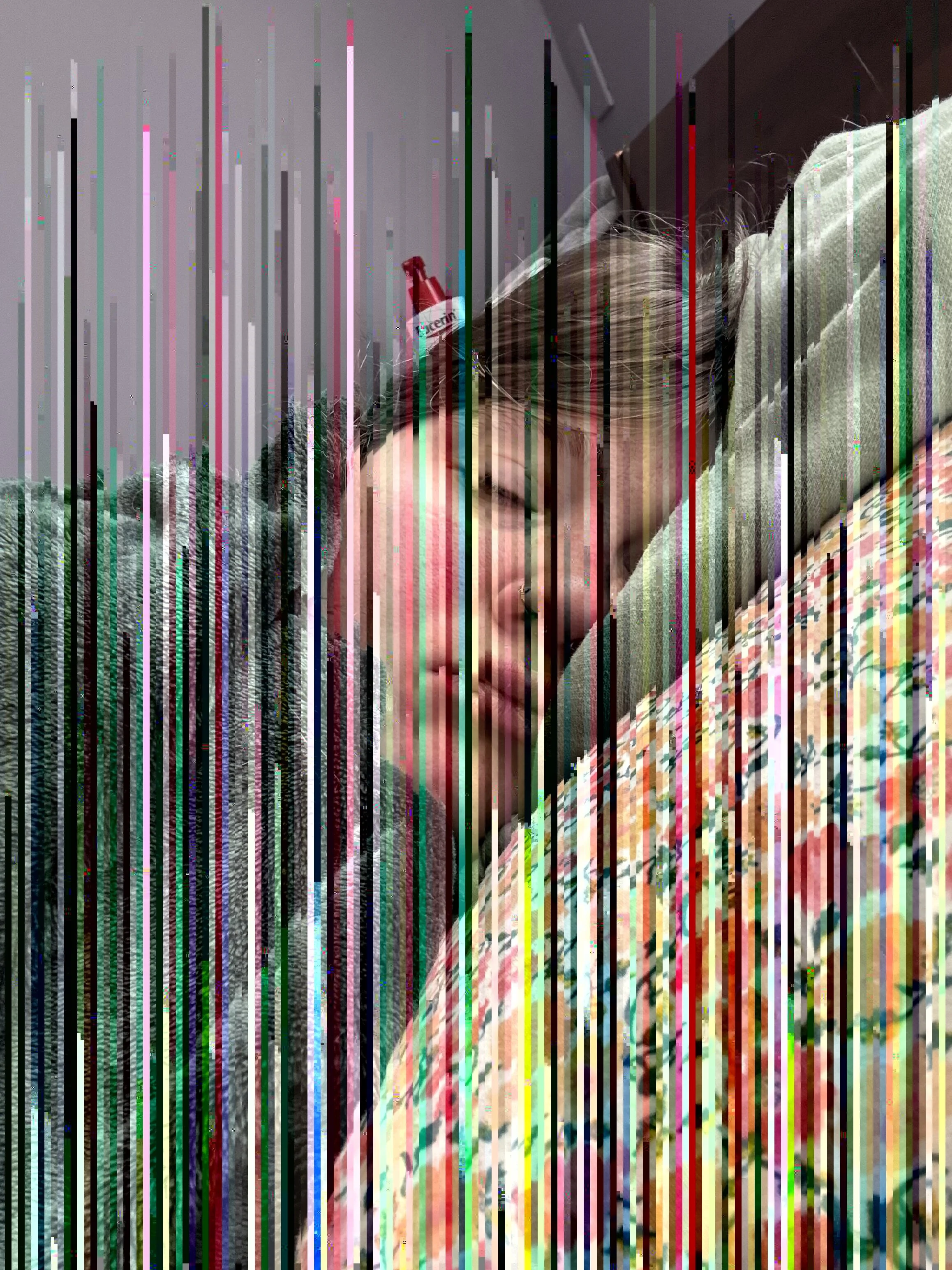
This self portrait is overlaid with a lot of horizontal and vertical lines varying in color, length, and distance from each other in a woven structure. The lines, resembling those that appear in a digital glitch, significantly obstruct the view of the underlying photo, especially in the bottom right corner. Through the lines, the shape of a person’s head is visible, leaning to the right—maybe lying on a pillow. All facial features except for an eyebrow are obscured. Portions of the glitched lines and pixels are are collaged with light reactive materials, sparkling or changing color with movement in contrast to the matte photograph.
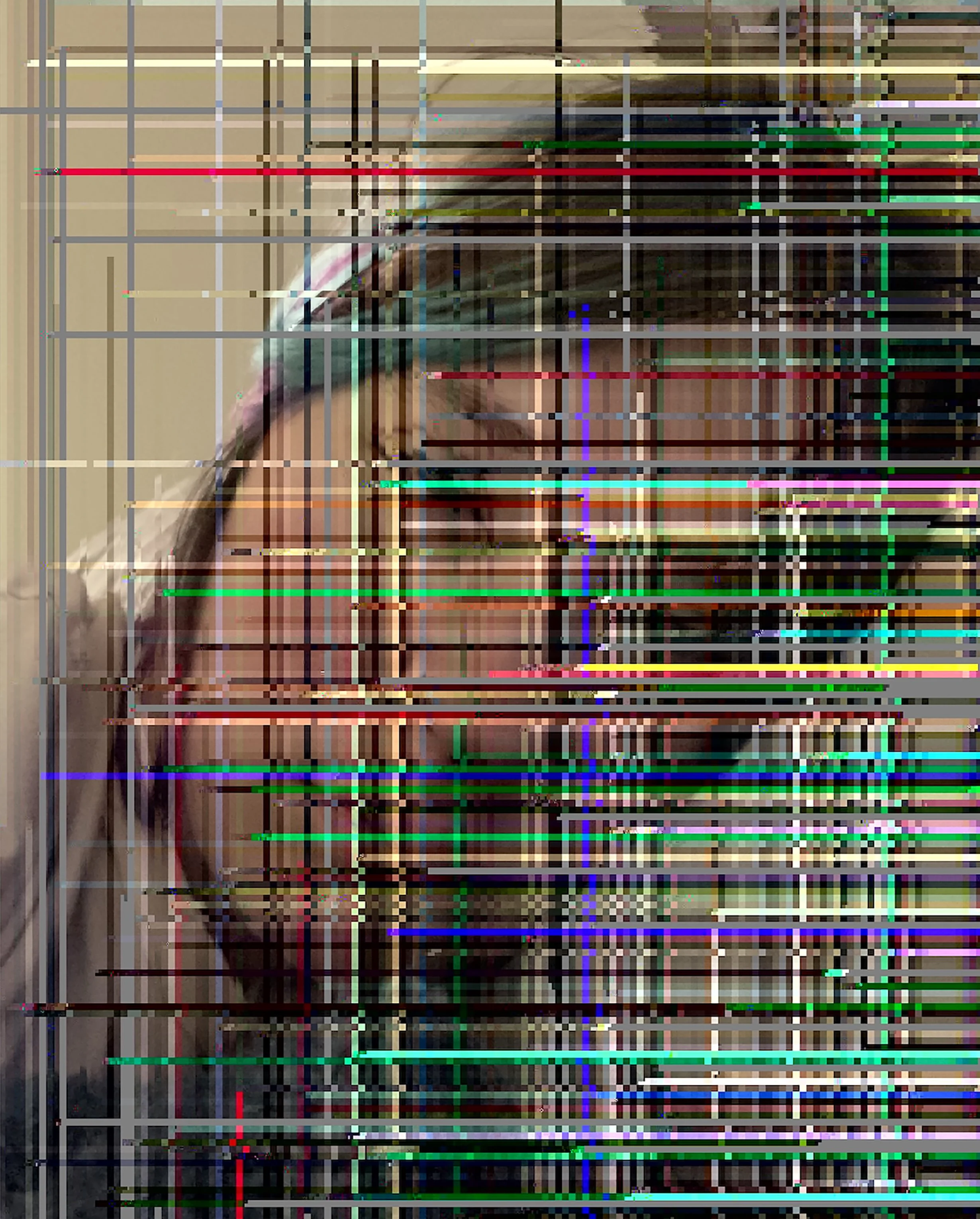
January 20, 2024 11:01 PM
This self portrait is overlaid with a lot of horizontal and vertical lines varying in color, length, and distance from each other in a tightly woven pattern, especially in the bottom right. The lines, resembling those that appear in a digital glitch, significantly obstruct the view of the underlying photo. Through the lines, the shape of a white person’s neck and face is visible, very close to the camera, and staring directly at it. All facial features are obscured but the person’s glasses are slightly discernable.
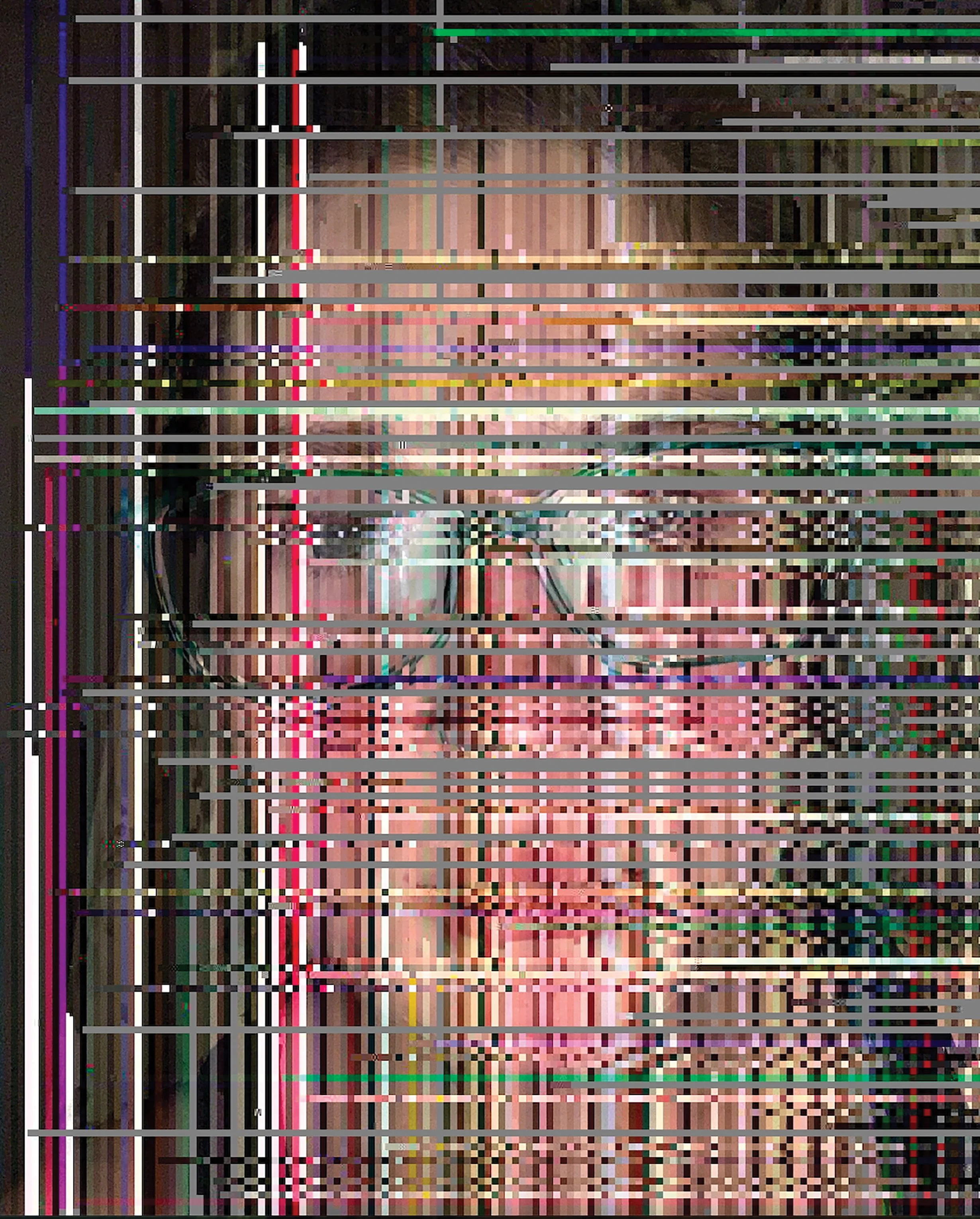
June 29, 2025 2:26 PM
This self portrait is overlaid with many vertical lines varying in color, length, and distance from each other clustered heavily at the bottom of the photo. The lines, resembling those that appear in a digital glitch, obstruct the view of the underlying photo, although most details remain discernable. The photo captures a white feminine appearing person with long blue hair sitting in a car. They look directly at the camera with a neutral expression.